Serving Those Who Served: Dr. Hussain’s Journey in Veteran Care
Raza Hussain, BDS, DMD, FACS
3/9/2026
Oral and maxillofacial surgeons routinely treat patients who have lost teeth due to poorly controlled diabetes, car accidents, or other common causes. But when Dr. Raza Hussain meets a patient with this type of trauma, the story behind it is often far more harrowing.
“How often do you hear a patient say, ‘Well, doc, I lost my teeth because the helicopter I was in got shot down. It crashed, my face hit a steel pillar, and my eye socket was smashed.”
For two decades, Dr. Hussain has served both the University of Illinois and the Veterans Affairs (VA) system, hearing stories like this far more frequently than most surgeons ever will. Once a service member is discharged with catastrophic injuries, it becomes the lifelong responsibility of VA clinicians like him to ensure they receive the care they need.
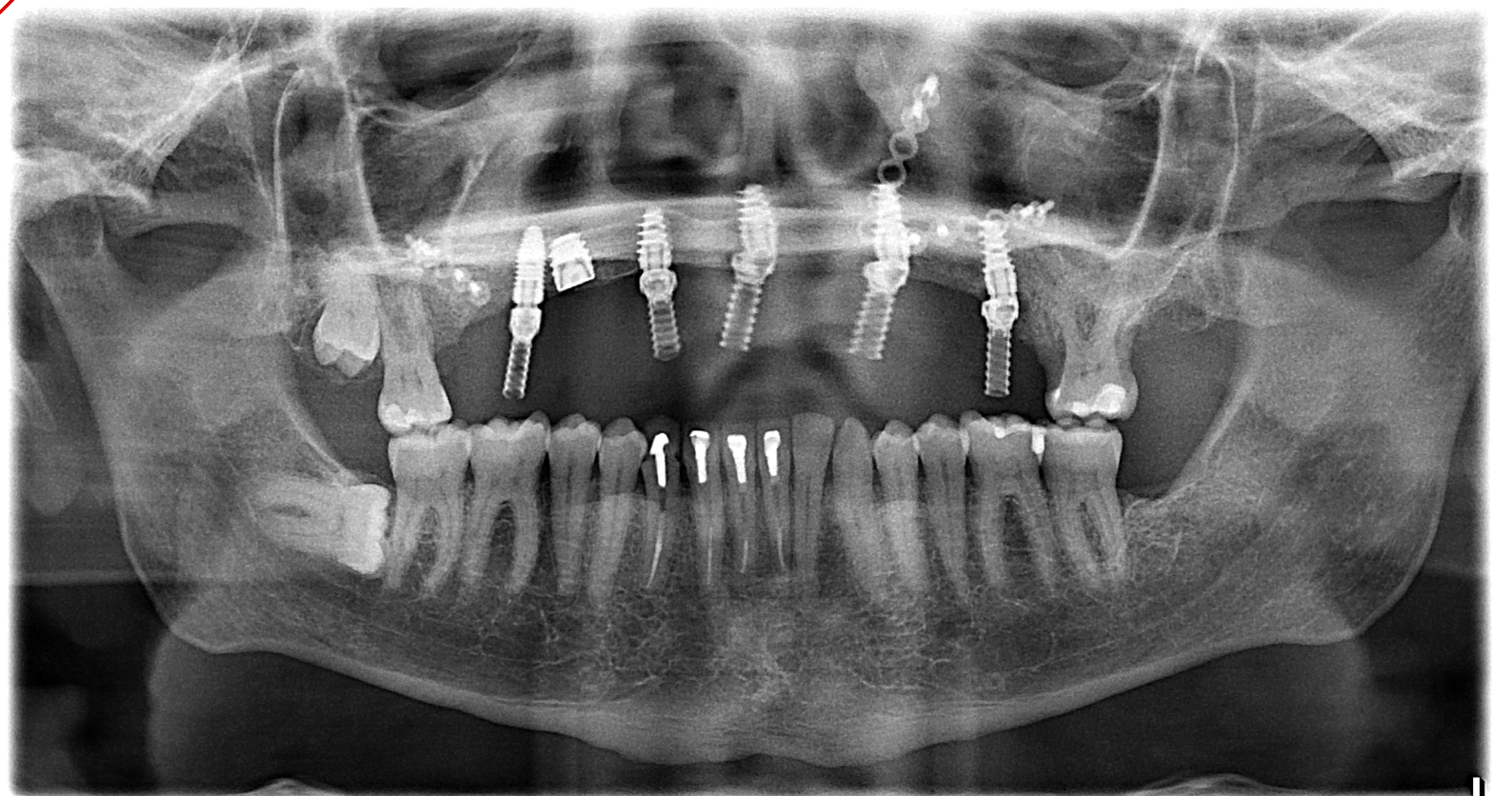
Reconstruction like this is common in Dr. Hussain’s work with veterans recovering from severe facial trauma
He often treats veterans who were barely out of their teens when they were deployed, suffered devastating injuries, and returned home facing a lifetime of medical challenges. That responsibility, he says, is one he feels deeply.
Dr. Hussain still becomes emotional recalling stories like these. “I find it noble,” he said. “There’s something special about taking care of someone who made a sacrifice for our country, and who chose to protect their fellow Americans.”
An Interest in the VA Formed
Although Dr. Hussain’s path to dentistry might seem preordained, as his father and siblings practice, too, working in the VA was not something he initially expected. After spending time at the VA as a resident, and during both general medicine and surgery rotations, he found himself intrigued and compelled to pursue this work.
He explains that caring for veterans requires consideration beyond standard clinical algorithms. For example, managing hypertension is not always straightforward. When treating a veteran, he also weighs factors such as post‑traumatic stress disorder (PTSD), which may contribute to their overall health and treatment needs.
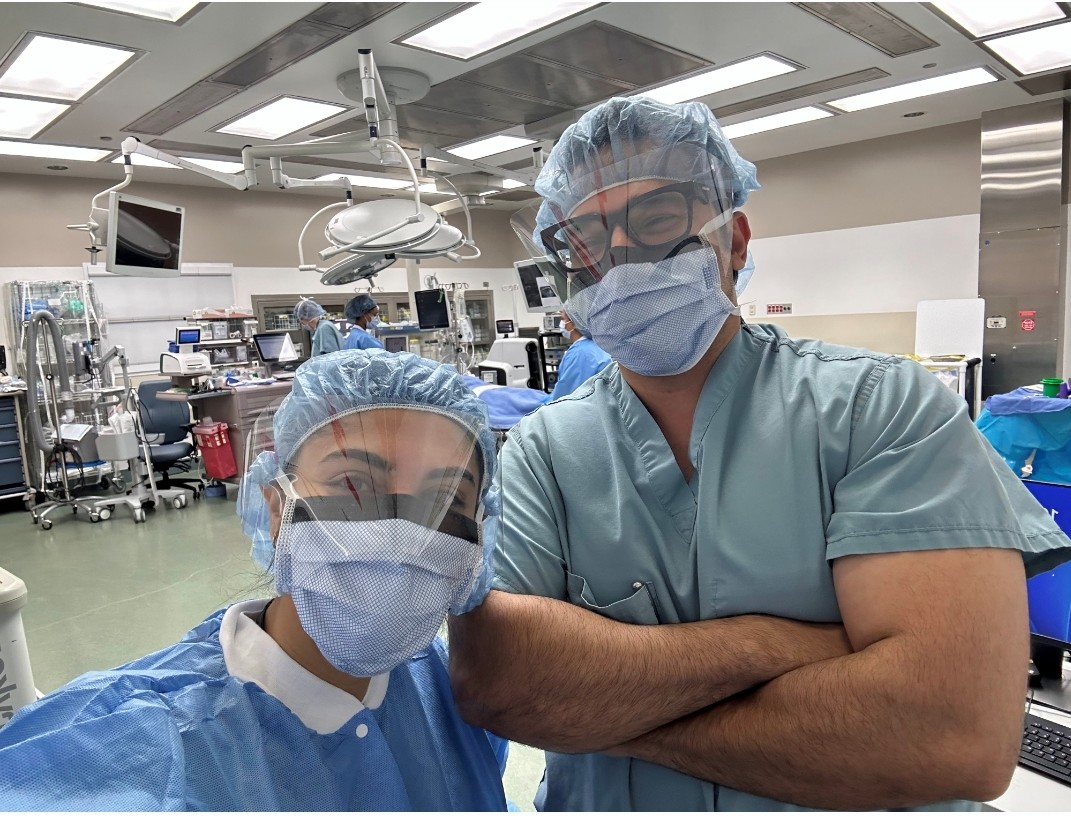
Dr. Hussain pictured with a team member in the operating room.
Today, Dr. Hussain serves as faculty at the University of Illinois Chicago (UIC), caring for patients across the Chicagoland area while training oral and maxillofacial surgery (OMS) residents and UIC dental students.
Working With Veterans and Residents Is Rewarding
Day to day, Dr. Hussain’s work has evolved over the past 20 years. When he first began, he frequently treated WWII veterans, but now, most from that generation are gone. Meeting one today is a special occasion, as they are often around 100 years old.
Over the course of his career, he has also cared for many Vietnam-era veterans and has followed them through different stages of their lives. Being able to “hold their hands” through health challenges and guide them along the way is deeply meaningful to him. “I find it super rewarding,” he said. He also shared how humbling it feels to receive their gratitude and always responds, “No, thank you for your service.”
Although OMS professionals within the VA and in academic settings generally earn less than those in private practice, Dr. Hussain believes the trade-off is worth it. Just as he loves walking alongside his veteran patients, he enjoys training residents and watching them grow from newcomers into capable and confident surgeons.
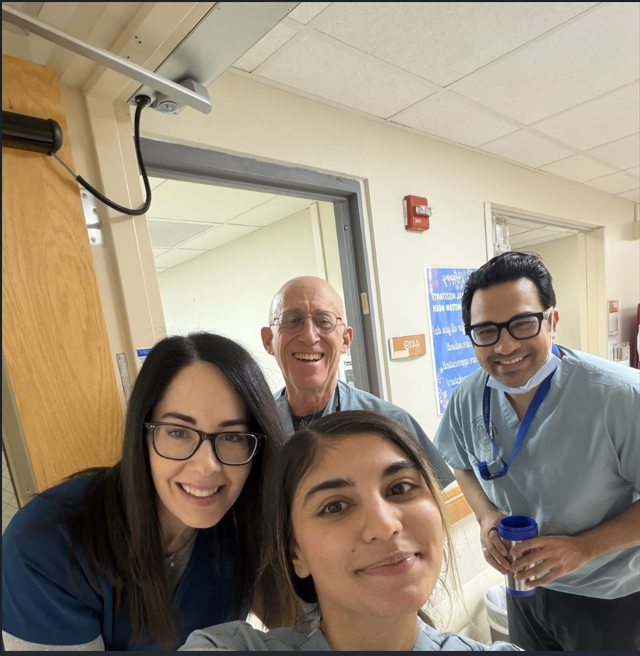
Dr. Hussain pictured with his team at UIC.
Another significant part of his day-to-day life is administration, which can be more involved than in other practice settings. In addition to treating patients and supervising trainees, he often spends time on the phone with medical facilities across the country, consulting on cases and coordinating when and how to bring veterans to Chicago. Surprisingly, this aspect of the job is something he genuinely enjoys, and he likes finding efficiencies and improving processes.
‘Doc, You Have PTSD’
Although Dr. Hussain frequently hears stories from veterans who have experienced catastrophic injuries, he knows he cannot always fully grasp what they’ve gone through as trauma affects everyone differently. Still, he works intentionally to build rapport in any way he can. He values connecting with his patients and making them feel welcome: “I am able to form that bond,” he said. Recently, a health scare of his own has even helped deepen those connections.
After what was meant to be a routine medical procedure, Dr. Hussain experienced a sudden and life‑threatening complication. “I almost died,” he recalled. When he eventually returned to work after a couple of weeks — an unusually long absence for someone who rarely took a sick day — veterans immediately asked where he had been. Sharing his story with them has helped him relate to veterans with PTSD on an entirely new level.
With the veterans he was already close to, he found himself describing what happened, how he felt in the moment, and what was going through his mind. One veteran listened and gently told him, “Doc, you have PTSD.”
“I thought, ‘Holy cow,’” he said.
Some veterans offered advice, reflecting on their own experiences. One told him that years ago, veterans were encouraged to bury their feelings: “That’s the exact opposite of what you should do. Share it with people who care about you.”
One veteran whom he had treated for 20 years shared with him a quote: “You never know what worse luck your bad luck has saved you from.”
Looking back on his near‑death experience through that lens, Dr. Hussain realized how differently things could have unfolded. Had he been traveling for a conference that week, alone in a hotel room, he might not have been able to triage the situation. It could have been far worse.
Considering Veterans Affairs as a Career Path
Veterans Affairs may not be the first path OMS professionals consider when entering the field, but Dr. Hussain encourages keeping it open as an option. “It’s not all butterflies and rainbows working for the federal government, but once you become well‑versed in that, you develop resilience and become more adept at handling situations, residents, and trainees.” But navigating organizational nuances is a challenge in academia and other practice settings as well.
Dr. Hussain encourages all OMS professionals to consider the VA. They offer benefits not always widely known, such as loan forgiveness after 10 years of employment and robust leadership training. Pay as well is better than many assume, and the work‑life balance is exceptional.
Dr. Hussain is more than happy to discuss with any prospective surgeons who may be considering a career with the VA. Please feel free to reach out to him at: raza.hussain@va.gov.
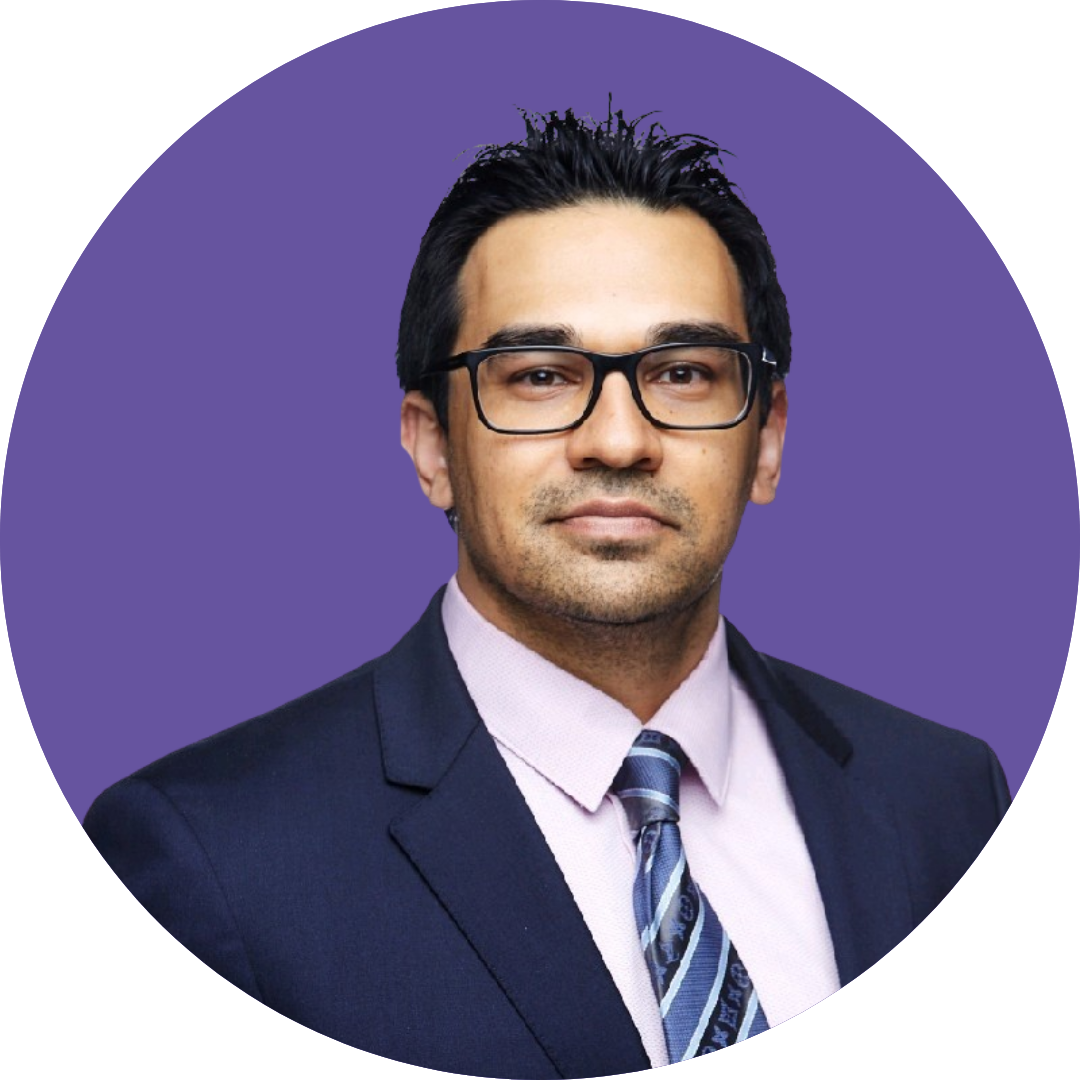
Raza Hussain, BDS, DMD, FACS
Dr. Raza Hussain is a 2005 honors graduate of the Boston University School of Dental Medicine. He completed his oral and maxillofacial surgery residency at the University of Illinois Chicago in 2010 and has remained on faculty since completion of his training. Dr. Hussain is currently the chief of oral and maxillofacial surgery at the Jesse Brown VA Medical Center and a clinical associate professor in the Department of Oral and Maxillofacial Surgery at the University of Illinois Chicago. His clinical interests include the surgical management of temporomandibular joint disorders, complex head and neck infections including the management of medication induced osteonecrosis of the jaws, and the treatment of the difficult implant patient. He has been involved in the placement of thousands of dental implants ranging from the most straight forward to the most complex of cases. Dr. Hussain’s area of expertise is in the management of the “compromised” or “failing” dental implant patient.
Dr. Hussain is a diplomate of the American Board of Oral and Maxillofacial Surgery, a fellow of both the American Association of Oral and Maxillofacial Surgeons and American College of Surgeons, and a member of the American College of Healthcare Executives. Dr. Hussain is on the examination committee of the American Board of Oral and Maxillofacial Surgery and is currently the senior co-chair of the Section One exam, a Commission on Dental Accreditation site visitor for the specialty of oral and maxillofacial surgery, a peer reviewer for the journals Clinical Oral Investigations, The Journal of Oral and Maxillofacial Surgery, Oral Surgery, Oral Medicine, Oral Pathology and Oral Radiology, and the VA’s COVID in 20 webinar series. He has also served as a member of the editorial board of The Journal of Oral and Maxillofacial Surgery and was selected from amongst his peers to be the VA delegate to the AAOMS.
Dr. Hussain has lectured nationally and internationally on the topics of TMJ surgery, complex dental implantology and resident education. Dr. Hussain is the recent recipient of the AAOMS ITL Scholarship and the VHA Innovation Fellowship Program as an entrepreneur in residence. He is a Leadership VA Fellow, class of 2022, and a graduate of the VA’s Healthcare Leadership Development Program.